


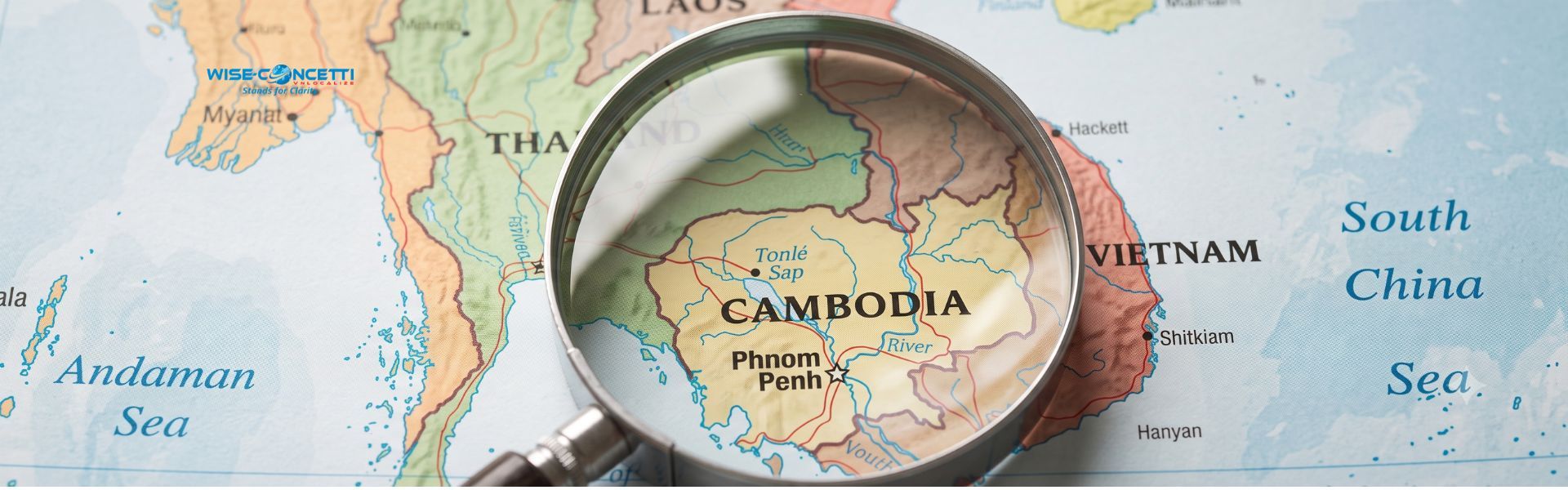
Khmer localization is the process of adapting products, software interfaces, marketing collateral, and digital experiences linguistically, technically, and culturally for consumers in Cambodia. Expanding brands often treat Cambodia as a secondary frontier behind regional hubs like Vietnam or Thailand, yet localizing into Khmer has shifted from an optional growth tactic to an operational consideration few businesses can afford to skip.
According to the DataReportal Digital 2024 Cambodia Report, Cambodia had 9.66 million internet users at the start of 2024, an internet penetration rate of 56.7%, alongside 11.65 million active social media user identities, equivalent to 68.4% of the total population. Tapping into this rapidly digitizing consumer base generally requires direct engagement in the national language, since English-only campaigns often struggle to build local trust or achieve deep market penetration.
Why Cambodia Is Too Big to Treat as an Afterthought
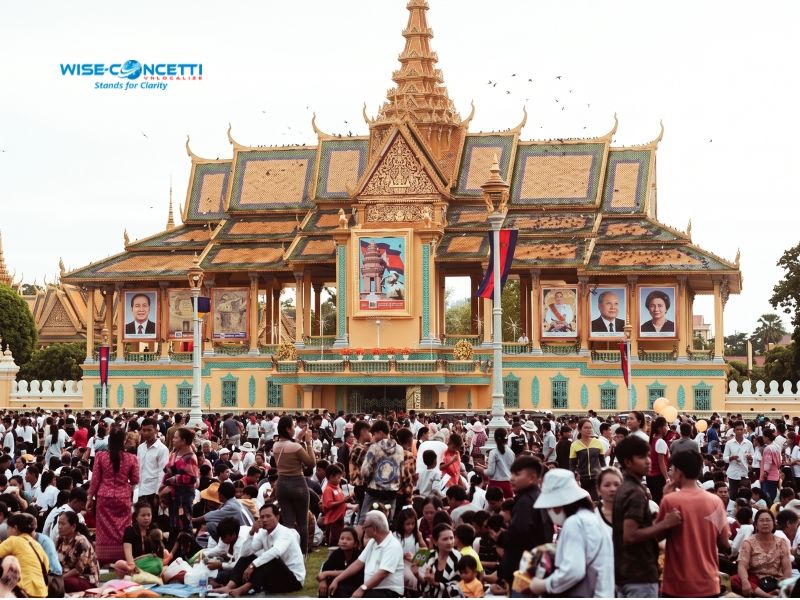
Cambodia is an agile, mobile-first market where digital adoption is outpacing legacy retail infrastructure in many segments. Consumers increasingly bypass desktop computing altogether, relying on smartphones for daily transactions, digital entertainment, and brand discovery.
According to data from the National Bank of Cambodia reported by Developing Telecoms, the national mobile payment application Bakong recorded 200.93 million transactions in 2023, reflecting a sharp rise in cashless consumer activity. Total nationwide digital payment activity across all banking systems reached approximately 75.8 billion USD that year, pointing to a decisive shift toward instant digital commerce.
Social commerce remains a dominant model for online purchases in Cambodia. Consumers frequently discover products through video campaigns on Facebook or TikTok, ask questions via direct messaging, and complete orders using QR codes. When brands deliver product descriptions, return policies, and customer onboarding exclusively in foreign languages, user drop-off tends to rise. Investing in dedicated Khmer translation and localization services can help companies across a range of industry sectors lower customer acquisition costs and build customer loyalty earlier.
The Khmer Language Law You Can't Ignore
Commercial communication in Cambodia is governed by statutory language rules. Sub-Decree No. 232, issued November 4, 2022, requires all commercial advertising (print, online, broadcast, and outdoor) to feature Khmer text placed above or before any foreign-language text, with the foreign script capped at half the Khmer font size (see analysis from BNG Legal and DFDL).
In practice, this means a shopfront sign should read ហាងកាហ្វេ ("Coffee Shop") in large Khmer script above a smaller "COFFEE SHOP" in English, not the reverse, and not in equal-sized type.
Three exceptions apply: registered foreign-language trademarks, publications with official dual-language authorization, and approved bilingual broadcasts.
The Ministry of Commerce's Consumer Protection, Competition and Fraud Repression Directorate-General (CCF) enforces the decree; penalties range from written warnings to mandatory collateral changes, suspended activity, and fines.
Regulations and enforcement can change, so confirm specifics with local counsel before launching a campaign.
Khmer Is Not the Same as Thai, Lao, or Vietnamese
A common assumption in Southeast Asia market entry is that neighboring languages can be grouped together, or that one "regional" localization pass can cover Cambodia alongside Thailand, Laos, or Vietnam. It cannot.
Khmer belongs to the Austroasiatic language family, while Thai and Lao belong to the unrelated Tai-Kadai family. Vietnamese is also Austroasiatic but split off long ago and today uses a Latin-based alphabet rather than a native script.
Khmer, Thai, and Lao scripts all descend from a shared ancient Brahmic ancestor, which is why they can look superficially similar to an untrained eye: rounded, curling characters. But none of the three is mutually readable, and each occupies a completely separate Unicode block: a Thai font or Thai-formatted file cannot render Khmer script, and vice versa.
A simple everyday example: "thank you" is អរគុណ in Khmer, ขอบคุณ in Thai, and cảm ơn in Vietnamese: three different words, three different scripts, for the same common phrase.
Khmer is also non-tonal, unlike Thai, Lao, and Vietnamese, which all rely on tonal contours to shape word meaning. That distinction matters as much for voice and audio localization as it does for text. Because these languages aren't mutually intelligible even in speech, treating them as interchangeable is a more consequential mistake than it might first appear: each requires its own glossary, native linguist review, font and rendering pipeline, and, in Cambodia's case, its own regulatory considerations under Sub-Decree 232.
These differences are not unique to Cambodia. Across Southeast Asia, languages may share geographic proximity or historical influences while still requiring very different approaches to translation, typography, UX, SEO, and cultural adaptation. Understanding these market-specific differences is essential to effective Southeast Asia localization, especially for businesses expanding across several countries at once.
What Makes Khmer Technically Difficult to Localize
Khmer belongs to the Mon-Khmer branch of the Austroasiatic language family and carries structural characteristics that can challenge standard translation and engineering pipelines. Localizing software or documentation into Khmer generally requires attention to a few distinct typographical and linguistic traits.
No spaces between words
Written Khmer does not use spaces to separate words; spaces are reserved for clauses, sentences, or structural pauses instead. Standard rendering engines and desktop publishing tools can misidentify where a word begins and ends, which can lead to broken compounds and unreadable line wraps. To help preserve typographical integrity, localization teams often insert zero-width spaces (ZWSP, Unicode character U+200B) between words. Without this boundary insertion, UI buttons, packaging layouts, and digital banners can break mid-syllable, which can confuse readers and weaken visual presentation.
For example, "I love Cambodia" is written as one unbroken string: ខ្ញុំស្រលាញ់កម្ពុជា (ខ្ញុំ = I, ស្រលាញ់ = love, កម្ពុជា = Cambodia). Without a boundary marker, a renderer may wrap it mid-word, splitting កម្ពុជា into កម្ពុ‑ / ‑ជា. A zero-width space at the real boundaries (ខ្ញុំស្រលាញ់កម្ពុជា) tells the renderer where it's safe to break.
Two competing spelling systems, no reliable autocorrect
The linguistic landscape includes two orthographic standards in active use: the traditional Chuon Nath dictionary and modernized spelling conventions from the National Council of the Khmer Language (NCKL). This dual foundation can create discrepancies in vowel usage and consonant cluster choices across sources. The challenge is compounded by the limited availability of dependable, automated spellcheckers for Khmer in major operating environments, and by CAT tools that often lack deep linguistic parsing for Khmer morphology. This places more of the burden for spelling, syntax, and terminological consistency on human linguist review and multi-tier quality assurance.
A few everyday words illustrate how visible this split can be, since both spellings circulate in real usage:
- "to give / for": ឱ្យ, also written ឲ្យ or អោយ
- "height": កម្ពស់, also written កំពស់
- "price": តម្លៃ, also written តំលៃ
Social registers and honorifics
Khmer vocabulary can shift considerably depending on the social status, relative age, and relationship between speaker and listener, with distinct registers associated with royalty, Buddhist clergy, government officials, and the general public. In commercial communication, an unsuitable register can weaken how a brand is perceived: overly colloquial language can read as disrespectful, while an overly formal register can make customer service communication feel distant. Establishing a clear style guide that defines the intended register for each buyer persona tends to reduce this risk.
The verb "to eat" illustrates this well: ស៊ី is blunt, even crude; ញ៉ាំ is the everyday polite form; ឆាន់ is reserved for Buddhist monks; and សោយ is used only for royalty. Using the wrong one in customer-facing copy can read as either disrespectful or oddly grandiose.
Dual numeral systems and locale conventions
Cambodia uses two numeral formats side by side: Khmer numerals (០, ១, ២, ៣, ៤, ៥, ៦, ៧, ៨, ៩) and standard Arabic numerals. Official documents and formal certificates often specify Khmer script numbers, while e-commerce storefronts and financial applications more commonly display Arabic numerals. Date formats, currency symbols, and address structure also follow local conventions that typically require explicit engineering rules during data formatting.
For example, a government certificate might render a date as ២៥ ធ្នូ ២០២៦ in Khmer numerals, while the same date on an e-commerce checkout page typically shows as 25/12/2026. It's the same information, formatted for two different audiences and contexts.
Fonts, Unicode, and Why Khmer Content Breaks on Screen
Rendering Khmer script digitally depends heavily on font stack selection and engine compatibility. Older, non-Unicode ASCII-based fonts have historically produced corrupted text, misplaced diacritics, or empty rectangular placeholders informally known as “tofu.”
Legacy fonts like Limon and ABC worked by remapping ordinary Latin keys to Khmer glyphs. Open that same file without the exact font installed, and it reveals random Latin characters instead of Khmer. That's one reason so much older Cambodian content still looks "broken" on modern devices.
The KhmerOS project and the integration of Khmer into Unicode established a more standardized encoding for the script, though rendering issues can still appear when complex consonant subscripts (known as Cheung) or stacked vowel marks fail to align properly on unsupported systems or outdated browsers.
Even a common word carries this risk: ស្ត្រី ("woman") stacks a subscript cluster beneath its base consonant. On an unsupported font, that stack can float, overlap, or collapse instead of rendering as one clean glyph block.
Prioritizing open-source, Unicode-compliant typefaces such as Noto Sans Khmer, Hanuman, or Kantumruy Pro is a reasonable starting point for digital products. Before launching a web application, mobile app, or print marketing collateral, it's worth running localization engineering and software localization testing across a range of desktop, iOS, and Android devices to confirm diacritics render cleanly without truncation.
What to Look for in a Khmer Localization Partner
Selecting a service provider for the Cambodian market means evaluating engineering depth and linguistic controls, not only translation capability. Because automated tools currently provide limited support for Khmer grammar, a reliable partner generally maintains stronger manual processes. A few things worth checking:
- A rigorously vetted native linguist network: the provider should work with qualified, native Khmer linguists who bring domain expertise in your vertical and understand both NCKL standards and commercial vernacular.
- Specialized DTP and engineering capability: the team should show practical experience with zero-width spaces, hyphenation rules, and complex script rendering in tools like Adobe InDesign, Figma, and mobile UI frameworks.
- Awareness of Cambodian statutory requirements: the partner should understand formatting constraints under Sub-Decree 232, so text hierarchies and layouts align with regulatory expectations.
- Multi-tier QA workflows: to offset the lack of native autocorrect tools, the agency should rely on structured proofreading, independent editing, and linguistic quality assessment (LQA).
Khmer Localization Checklist Before You Launch
Use this checklist to review technical, linguistic, and regulatory readiness before a commercial launch:
Category | Why It Matters |
| Sub-Decree 232 audit | Verifies that marketing assets place Khmer above foreign text and maintain the required font size ratio to reduce regulatory risk |
| Unicode font verification | Prevents corrupted characters, overlapping diacritics, and missing glyphs across different operating platforms and devices |
| Zero-width space formatting | Helps UI containers, digital ads, and printed packaging wrap lines along legitimate word boundaries rather than breaking syllables |
| Tone and register alignment | Matches brand messaging to appropriate social honorifics, balancing accessibility with cultural respect |
| Number and currency standards | Aligns Khmer and Arabic numerals where appropriate, and standardizes pricing in Cambodian Riel (KHR) and USD |
| Real-device UI testing | Identifies vertical truncation, text expansion issues, and clipped layouts on Android and iOS devices commonly used in Cambodia |
| In-country review | Gathers qualitative feedback from local market stakeholders to confirm terminology matches prevailing commercial usage |
What Content Should Businesses Localize for Khmer?
Priorities depend on the product and customer journey, but most businesses entering Cambodia eventually need to localize across the following areas:
Content | Why It Matters |
| Website | Improves accessibility, local trust, and Khmer-language search visibility |
| Mobile apps & software | Supports natural navigation for a mobile-first user base and keeps terminology consistent across the interface |
| E-commerce | Helps users understand product descriptions, pricing, and return policies in the format they expect |
| Marketing content | Required under Sub-Decree 232 for public-facing campaigns, and builds trust in a social-commerce-driven market |
| Customer support | Matches tone and register to the audience, avoiding disrespect or excessive formality |
| Technical documentation | Helps users and partners understand product functionality accurately |
| Legal & regulated content | Requires precise terminology and compliance with statutory language requirements |
| Multimedia | Makes subtitles and voice-over content accessible to Khmer-speaking audiences |
Businesses do not need to localize everything at once. A market-entry strategy can prioritize the highest-impact touchpoints first, such as landing pages, checkout flows, and customer support.
FAQ
Is Khmer localization legally required in Cambodia?
For consumer-facing advertisements, billboards, promotional broadcasts, and commercial signage, Khmer is required under Sub-Decree No. 232. Internal enterprise documentation can typically remain in a foreign language, but public commercial materials need to prominently feature Khmer. It's worth verifying specific marketing rollouts with local legal counsel.
Can machine translation handle Khmer accurately?
Machine translation engines still tend to struggle with Khmer, largely due to limited training data, complex script structure, and unsegmented sentences. Raw machine output can be useful for internal gist comprehension, but using it unedited for customer-facing or legal content carries a meaningful risk of grammatical errors or cultural missteps.
Do I need separate content for Khmer and English, or can I run bilingual?
Bilingual assets are commonly accepted in urban hubs like Phnom Penh and Siem Reap, provided they comply with Sub-Decree 232's font hierarchy rules. For campaigns aimed at the broader population or provincial markets, dedicated, culturally adapted Khmer-first content tends to perform better in engagement and conversion.
Conclusion
Preparing Your Brand for Cambodia
Entering Cambodia generally works best when regulatory compliance and respect for local linguistic identity move together. As digital infrastructure matures and the domestic market grows, companies that invest in reliable, culturally resonant Khmer communication are better positioned to build lasting customer trust.
Wise-Concetti brings more than two decades of regional localization experience, an ISO 9001:2015-certified quality framework, and a vetted network of native Khmer linguists to help your brand approach the Cambodian market with more confidence.
Planning to localize your product or content for Cambodia? Connect with Wise-Concetti to build a Khmer localization workflow backed by native linguistic expertise and deep Southeast Asia market experience.
 Trending
  Categories